

I am not sure where to start
Use the private, educational assessment or prepare for a first consultation.
Start hereWe use essential cookies to run this site; optional cookies help us understand and improve your experience. Learn more
These summaries help you prepare for a conversation with a clinician. They are educational, not medical advice, diagnosis or a treatment recommendation.
Use the private, educational assessment or prepare for a first consultation.
Start hereLearn the purpose, steps and questions to discuss with a specialist.
Start hereExplore egg, embryo and sperm freezing without assuming suitability or future success.
Start hereReview male-factor basics, semen analysis and when a specialist may discuss further evaluation.
Start hereLearn the difference between PGT-A and PGT-M and why counselling matters.
Start hereRead a cautious overview and prepare questions for an individual clinical review.
Start hereSee what to bring, what may be discussed and possible next steps.
Start hereExplore visit and treatment-preparation guidance while following your treating team’s instructions.
Start hereEducational content — clinical and native-Arabic review applies
Education library
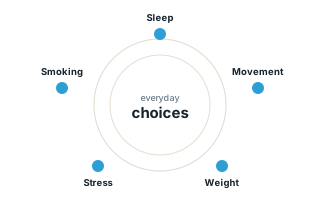
Fertility is influenced by many factors — some medical, some related to everyday life. Small, consistent changes can meaningfully support your reproductive health, and understanding what those changes are is a great first step.
Read the topic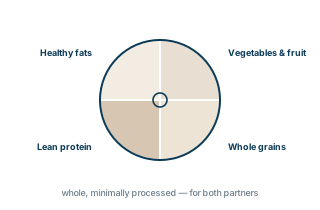
What you eat doesn't determine fertility on its own — but nutrition is one of several lifestyle factors that can support your reproductive health. A diet rich in whole, minimally processed foods is a good foundation for both partners.
Read the topic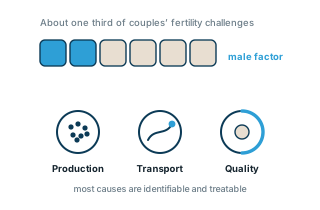
Male factor infertility accounts for roughly one-third of fertility challenges faced by couples. It's far more common than many people realise — and in most cases, there are clear, treatable causes.
Read the topic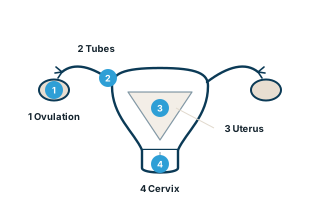
Female infertility has many possible causes — most of them identifiable with the right tests and many of them treatable. Understanding what may be affecting your fertility is the first step toward finding a path forward.
Read the topic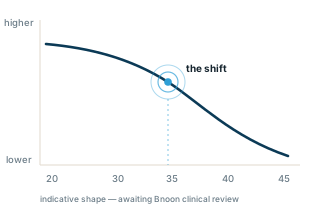
The relationship between age and fertility is one of the most important — and most frequently misunderstood — aspects of reproductive health. Understanding what it actually means can help you make informed decisions about your own timeline.
Read the topic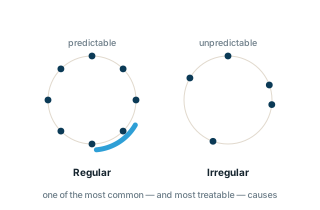
Ovulatory dysfunction — when ovulation doesn't happen regularly or at all — is one of the most common, and most treatable, causes of female infertility. Understanding it is an important first step.
Read the topic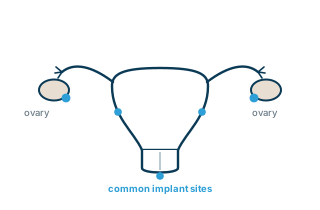
Endometriosis is a condition that affects many women, often for years before being diagnosed. Understanding it — what it is, how it feels, and how it may relate to fertility — can help you seek the right support sooner.
Read the topic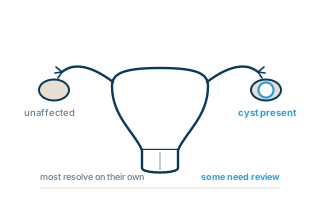
Ovarian cysts are very common and, in most cases, not a cause for concern. Understanding the difference between cysts that resolve on their own and those that may need attention is helpful for any woman navigating her reproductive health.
Read the topic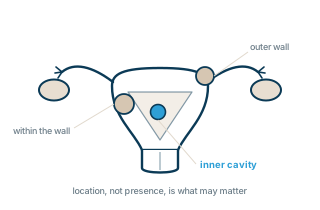
Uterine fibroids are one of the most common findings in women of reproductive age. For most women they cause no fertility problems at all — but in some situations, their location or size may be relevant to conception.
Read the topic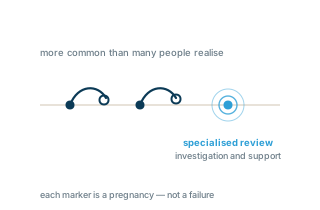
Experiencing more than one miscarriage is more common than many people realise, and it's a deeply difficult experience. Understanding what may be causing it — and knowing that specialised support exists — can make a significant difference.
Read the topic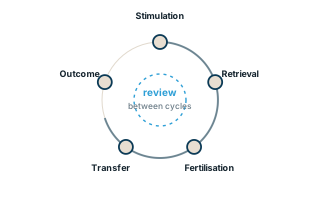
Going through IVF and not achieving pregnancy is one of the most emotionally demanding experiences a person can face. When it happens more than once, it's completely natural to want answers — and to wonder whether there are other approaches that might help.
Read the topicInformation is general, not a diagnosis or treatment recommendation.
Tests and next steps vary by history and clinician.
Follow your treating team when their instructions differ from general content.
Use the guides to prepare, then discuss options with a clinician.